Thursday, 27 August 2009

Records That Changed My Life, part 2 : Suede - Dog Man Star


I'm fascinated by the idea of partnerships where one complements the other. Taken on their own, they are talented people, and they can produce good work if paired off with another partner, but together they provide a unique magic that is distinctively theirs. So, while Paul McCartney has written good songs with Elvis Costello and Morrissey has released great material with Boz Boorer and Alain Whyte, their works are and will always be judged by their previous partnership (Lennon for the former and Johnny Marr for the latter). I realize that this is not fair to all involved, but to me, that’s the ugly truth. Suede's songwriting core, Brett Anderson and Bernard Butler, also fits that bill. i do not completely understand the circumstances that tore them apart, but in the brief time they were together they managed to release 2 classic albums that heralded (but not part of) the Britpop scene and now have become sadly forgotten by the hip cognoscenti (really, take a look at all the Best Albums lists in the last then years, and none have any Suede in them). Now this is a sad thing. Because Suede released one of the greatest albums of all time in the form of their sophomore effort, “Dog Man Star”.
It’s dark and pretentious, but this is one of those rare instances where it benefited from those traits. If the debut is full of rough’n’ready anthems, then this one is more experimental, with several songs lasting past the 7-minute mark. And for such a gloomy record, its moments of light pack a powerful, energizing punch. The effect is like tasting freedom after a long period in physical captive and mental anguish. Thus after the funereal “Daddy’s Speeding” we have the uplift of “The Power” (“Give me give me give me the power/and I’ll make them bleed”) and the eventual release of “New Generation”. The cumulative effect is, well, you have to experience it yourself. Now when people describe a record as “atmospheric” and “moody”, often that means it has a deficit of tunes. But happily, Anderson and Butler’s pop instincts are still generously employed. Never is a song overwhelmed by its instrumentation, the impressive details never obscured by the overblown production. Producer Ed Buller made sure that beneath the grand gestures are solid, memorable melodies. Aaah, yes, the melodies. This album is rich with them. Sometimes it hit you with obvious hooks (“New Generation”, “The Wild Ones”, still two of their greatest achievements), but sometimes it’s very subtle (the slow-burn of “Asphalt World” and “The 2 Of Us” force us to pay attention, but don’t worry, the reward is well worth it). This album was released in 1994, and its dark, despairing mood is a stark contrast to the burgeoning Britpop scene. Maybe that’s why, along with The Stone Roses’ Second Coming, it’s overlooked amid the chin-jutting sneer of Liam Gallagher and finger-pointing gestures of Jarvis Cocker. When Britons were obsessed with message centers, laddism, class wars and walks in the park, Anderson’s sense of iconography is more old-timey/classic and mostly USA-centric. The spirit of Hollywood legends Marilyn Monroe, James Dean and Marlon Brando inhabit these songs. Once Britpop hit big the following year, Suede fell under the shadows of Blur and Oasis, but dark clouds were already gathering even before the album got released. Butler quit/got fired, and many who considered him to be Suede’s chief musical architect talked of an uncertain future for what was once England’s brightest hopes. However, things took a rather interesting turn. Butler hooked up with David McAlmont to produce two sublime slices of indie-soul (later compiled into an LP, The Sound of McAlmont Butler) and Anderson picked up 2 unknown musicians, 18-year old guitar prodigy Richard Oakes and keyboard-player Neil Codling. With them, Suede produced “Coming Up” in 1996, which was praised for its immediacy and largely buoyant mood (almost the opposite of “Dog Man Star”) before calling it quits in 2003. No matter, because once the history books are revised, Suede would surely be reserved a place in the upper echelon, and their crowning achievement would always be their magnificent second album.

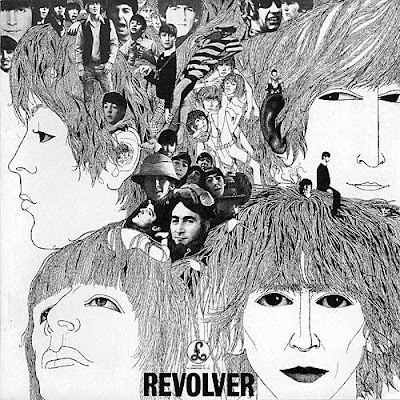
Records That Changed My Life, part 1 : The Beatles - Revolver


Revolver was the first Beatles album i bought. Wait, let me correct that. Actually, it was the first full Beatles album I bought. Before that, i had a lot of their compilations on cassettes (which mostly kicked off with "Love Me Do" and ended with either "Let It Be" or "Hey Jude"). So i was aware of their more... accessible material, I guess. But then i saw a documentary called "The Beatles Compleat", which valiantly tried to distill the whole story into two hours, and mostly succeeded (a few years later i discovered the narrator was none other than Malcolm McDowell. Cool). It was then that i noticed that this Revolver album is kind of interesting... there are a lot of songs there that i hadn't discovered.
Well, it was, and still is, a fascinating, diverse and often beautiful piece of work. My favorite Beatles LP will always be Rubber Soul, but this came very close to being its equal. Now, you may ask, why do i prefer its predecessor? Well, i never did understand George Harrison's statement that he considered Rubber Soul and Revolver as the two sides of the same record, because in my opinion, they could not be any more different. Whereas Rubber Soul is seamless, Revolver is more akin to a car crash, where all kinds of musical genres run into each other without any sense of cohesion. I myself prefer records that have a certain common thread on its songs But that doesn’t make it inferior, though. Song-quality wise, it remains every bit as good as Rubber Soul. And what it lacked in flow, it gained in both diversity and fearlessness. Think about it for a minute. This is a record by the most popular band of their time, and instead of sitting back, popping the cork and be pleased with themselves, the Beatles took considerable risks. And their bravery and confidence paid off handsomely, not just in a commercial way, but also in that all the material has inspired and influenced countless other bands. Because, let's be honest. most excursions that happened to rock'n'roll took its idea from Revolver and ran with it, whether it's chamber-pop (Eleanor Rigby, For No one), Raga-rock (Love You To), and jangle-pop (And Your Bird Can Sing, I Want To Tell You).
It also has the distinction of being the first Beatle record where you can tell who contributed what. Paul McCartney's songs are melancholic and meticulously melodic, while John Lennon was more fascinated with atmosphere and "feel". If Rubber Soul presented Lennon and McCartney as separate individuals but equal, then Revolver, as Albert Goldman memorably put it in his John Lennon bio "The Lives of John Lennon", now they're also opposites. There was clear optimism even in the saddest of McCartney tunes, and Lennon's work here all have an undercurrent of resignation and (drug-induced?) confusion. I still have that old, beat-up cassette of Revolver, bought in a small music shop in Ratu Plaza (which gives you a picture of how long ago this was), and though i don’t use it anymore (all the tracks have found permanent residence in my trusty MP3 player), i still find it hard to throw it away, because it meant so much to me, introduced me to music that is far-out, weird, yet somehow accessible.

Thursday, 9 July 2009

Casting Call : PLANETARY

Wildstorm's PLANETARY, written by Warren Ellis and illustrated by John Cassaday, is, to me at least, one of the best comics ever.

The tale of a mysterious organization who specializes in "Super-hero" archeology is often scary, sometimes baffling, but always interesting and fascinating. And the "done-in-one" structure of story-telling made it seem tailor-made for an HBO mini-series.

So, in a bit of harmless fun, who would be the guys and gals to perfectly capture these people on screen?

For Elijah Snow, i stand by Ed Harris. He has the white hair, and can flip-flop between tender and tough in an instant.


For the amazonian JAkita Wagner, i chose Rosario Dawson. The reason? Take a look...


For the Drummer, James Cameron's new guy Sam Worthington fits the bill. He can be innocent yet sarcastic at the same time.


BONUS! For Planetary's too-cool Third Man, Ambrose Chase, i think Chewitel Ejiofor would do nicely...


For the villains... Ah, The Four. These evil analogues of MArvel's first family deserve their place at the Top Ten list of the best bad-guys of all-time..

Randall Dowling = Christopher Eccleston. Nuff Said.


Kim Suskind = Miranda Richardson. She got that ice-cold b!tch thing down pat.


William Leather = Alan Tudyk. Tudyk can show off the tragic side of LEather very well, i thought.


Jacob Greene = Andy SErkis. No stranger to CGI... which means he can pull off the Abominable Monster facade....


Waht do you guys think?

Wednesday, 27 May 2009

The Life and Times of Tim Drake - Part 6

Robin II #1(of a 4-issue Limited Series)
“The Funniest Thing Happened...”
Creative Team:
Chuck Dixon – Writer
Tom Lyle- Penciller
Bob Smith – Inker

It was a no-brainer for DC Comics to follow-up their successful Robin miniseries. Considering the first one was a hit, they milked this cow for all its worth, in the form of variant covers, with holograms to boot. The quality of these so-called 'enhancements' leave a lot to be desired though, since the holographic image was processed from a 2-D drawing instead of a sculpted image. The result is a flat, boring image. The artists they chose to do the variants are also very hit-and-miss. However, the regular, un-enhanced covers are brilliantly done by Kevin Maguire, ably stepping in for Brian Bolland. Okay, enough marketing talk. What about the story? I gotta admit, the concept is very cool: Tim's first encounter with the Joker, who, remember, murdered Tim's predecessor Jason Todd. For the umpteenth time, the Joker escapes Arkham Asylum and kidnapped Osgood Pellinger, a computer genius, in order to plunge Gotham into a technological-induced Chaos. The story takes place during the “Idiot Root” storyline in which Batman went to South America. So, Robin's alone. This issue also introduced us to Ives and Hudson, Tim's nerdy high-school buddies, along with Karl Ranck, the residentjock. You can't tell from their appearance here, but all three would play a huge part in later stories. Anyway, Tim investigates Dr. Pellinger, and his first meeting with the Joker is unsettling indeed. The issue ends with Tim wondering what would happen if the Joker realize that Batman is not in Gotham...
A solid effort for a first issue. In fact, with an interesting premise and better production values, i'd say its better than the previous mini. Once again, it's always good to see Tim interacting with Batman's supporting cast, and remember, he was still a newbie, so Commisisoner Gordon's 'disappointment' to see Robin without his mentor is understandable, especially since there's a Grade-A wacko on the loose. Tim's banter with Alfred never fails to amuse. Tim's a reasonable enough fella to realize that he's not prepared to deal with a heavyweight like the Joker. (It's good, now and again, to see a hero readily admitting he's way over his head) And this is probably the first time we see a psychoanalysis of the Tim/Robin identity (which Dixon would explore more fully in the ongoing series) Yeah! The Dixon/Lyle/Smith team returns! Great story, great art. The only complaint I have is the shameless marketing strategy.

Classic Moments:


that Joker…. What a crazy guy

Classic Comic Moments : Nextwave - Agents of HATE

This one made me laugh out loud...


Definitely one of the funniest moments in comics EVER!

The Life and Times of Tim Drake - Part 5

Robin #5 (of a 5-issue Limited Series)
“The Dark”
Creative Team:
Chuck Dixon – Writer
Tom Lyle- Penciller
Bob Smith – Inker

King Snake's preparation for the germ is coming along, and Robin, Shiva and Clyde is ready to move. Clyde wants Robin out of this, but Shiva insist Robin can make his own decisions. Tim gets into the building from the sewers, though he got discovered by security only a few minutes later. Clyde's the first one to meet King Snake, though needless to say, his anger does not do much good against him. Robin makes sure the germ-weapon is safe, then gets to the penthouse, only to discover that Clyde is already dead. Once again Robin uses his whistling-staff for misdirection, and Sir Edmund winds up holding on to the building's scaffold (Did I make this sound easy? It's not though, and kudos to Tom Lyle for a terrific fight scene) . Shiva instructed Robin to kill King Snake, but he declined. We hear a scream. I guess Shiva killed him herself. After obtaining info that there's a money shipment to Gotham, Tim goes back home to prevent the money being received and fights Lynx, who now sports an eye-patch due to a punishment by King Snake because she failed to kill Robin. Batman shows up on the last two pages. Robin's education is just beginning.
This issue is a satisfying ending to a great miniseries. The demise of sir Edmund is left ambiguous (he'll return later in Batman #467-469, also done by Chuck Dixon and Tom Lyle). On the whole, what this mini established is Tim's strength as a character. We find out that, on his own, without Batman's supervision, he's still a strong, principled person with good, solid core values. He respects his elders, he's shown his creativity in defeating his opponents, and he gets along with other people quickly and easily (quite the opposite of his predecessor, who seemed to rub the worst way with everyone). While the mini was well-received, it seemed DC was reluctant to go the whole hog and give Tim his own book immediately (we have to wait until the events of Knightfall for that) In retrospect, I think this is a good move. This way DC took their time in making sure that the readers really love Tim for who he is. They do keep the fans' appetite sated by releasing some Robin annuals and a few miniseries later on. And considering this one was such a hit, they came across a gimmick to make sure the next mini will be even more profitable... but that's another story.

Cool Panel: